Your best work should be easier to find when a client is ready to book.
For many wedding and event vendors, the portfolio is one of the strongest sales tools in the business. It shows taste, trust, style, range, and proof that you can deliver.
But the actual image library is often scattered across phones, galleries, folders, Instagram, Pinterest boards, client emails, and old proposal files.
That means the right example can be hard to find at the exact moment it would help most.
The problem
Clients rarely describe what they want in perfect industry language.
They might say elegant, romantic, colorful, garden-inspired, modern, editorial, timeless, refined, or whimsical. They may send a few inspiration images and a rough feeling, but not the exact terms a florist, planner, venue, photographer, or designer would use internally.
Manual photo organization is slow. It is also inconsistent. One image might be remembered as a spring centerpiece, another as a garden-style tablescape, and another as that white-and-green reception from three seasons ago.
When visual work is hard to search, vendors lose time rebuilding context from memory.
How AI can help
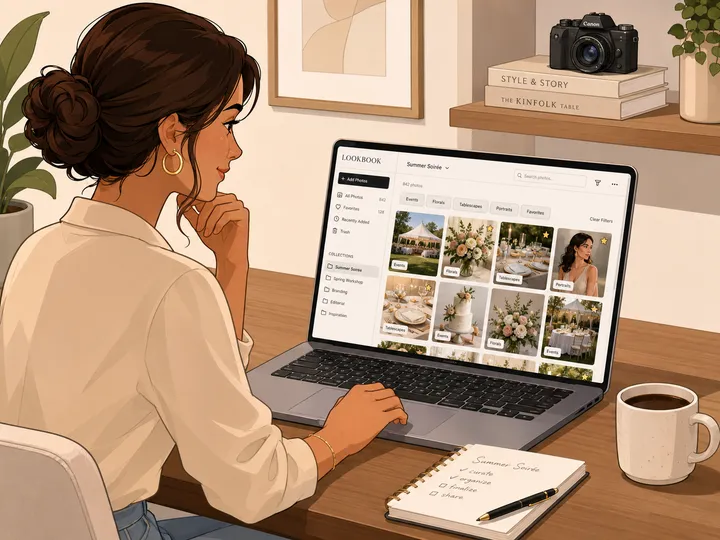
An AI lookbook can help turn a messy visual archive into a searchable business asset.
Instead of relying only on folder names or memory, AI can suggest useful metadata for each image: design type, style themes, color families, possible flowers or items, setting, season, formality, source type, tags, notes, and client-friendly captions.
AI can help:
- Organize past work by color, style, season, design type, and source
- Make inspiration images and client-provided references easier to compare
- Draft searchable captions and style notes for future proposals or sales calls
- Surface portfolio examples that match a client conversation
- Keep creative references connected to the words clients actually use
- Pull matching examples for proposals, client consultations, and event-day reference without rebuilding context from memory
The goal is not to let AI decide what your work means. The goal is to give you a faster starting point.
Why human control matters
Visual style is subjective.
One vendor’s whimsical might be another vendor’s organic. One florist may call a design refined, while another may call it classic. AI can also be uncertain about exact flower or item identification, especially from cropped or styled images.
That is why a useful AI lookbook should keep suggestions editable.
The vendor should be able to review, correct, approve, and refine the metadata. Over time, those corrections become part of the system’s memory, helping future suggestions better match the vendor’s language, taste, and business rules.
What this looks like in practice
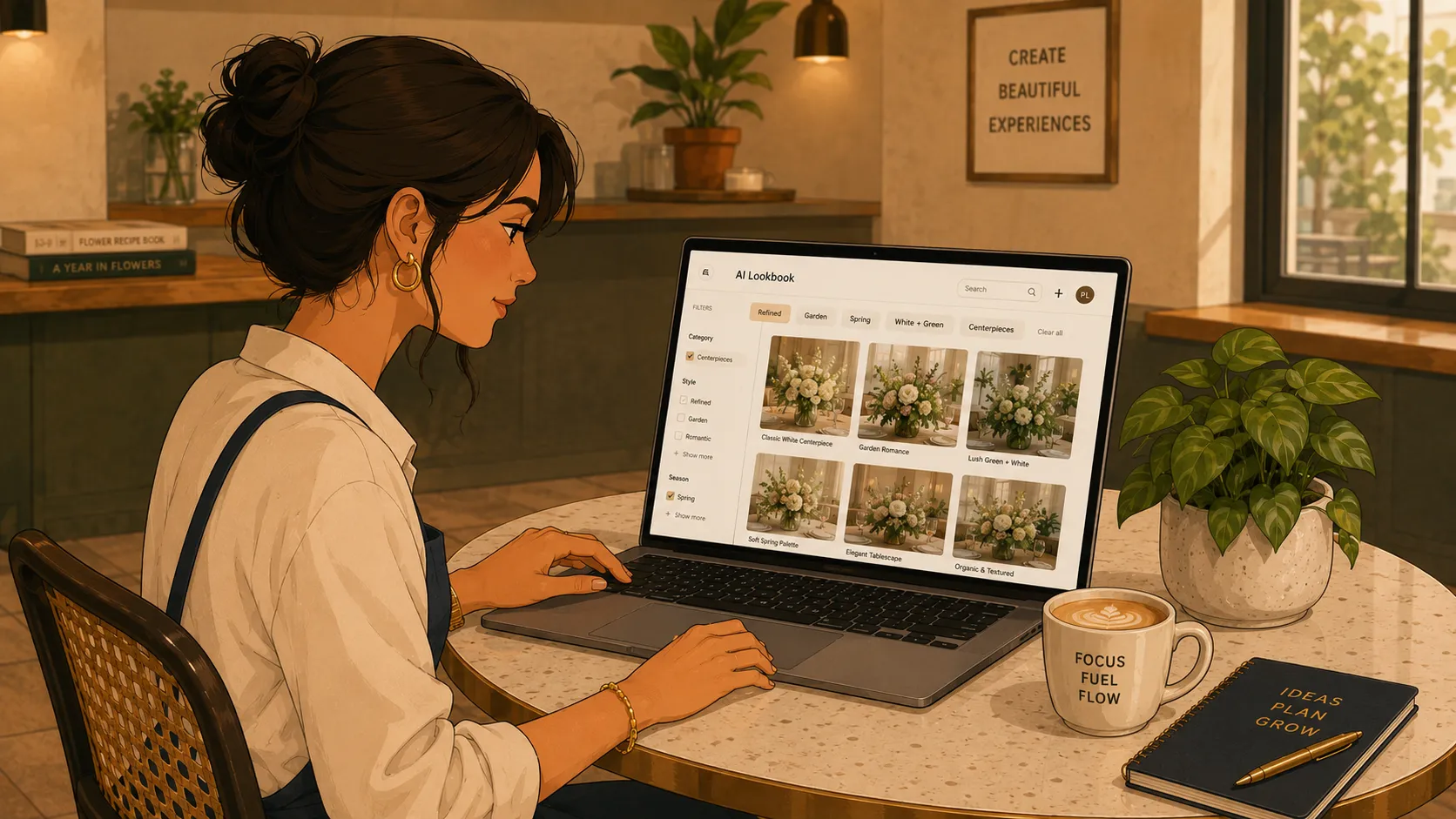
A florist could search for white, green, refined centerpieces from spring weddings and quickly find examples for a new client inquiry, a proposal revision, or a mid-planning style conversation.
A planner could organize design inspiration, venue references, tablescapes, signage, timelines, and final event photos by style and source, useful through the entire planning arc, not just the first discovery call.
A venue could tag ceremony setups, reception layouts, seasonal details, and vendor-created installations so couples can see relevant examples during tours, before signing, or while finalizing layouts.
A photographer could organize galleries by setting, mood, location, session type, and client need, making it easier to build proposals and maintain consistent style guidance for similar events.
In each case, the image archive becomes more than storage. It becomes part of the sales, planning, and client experience.
The bottom line
AI lookbooks help vendors reuse the value already inside their business.
Your past work, inspiration references, and client materials should not disappear into folders after the event is over. With the right system, they can become searchable, editable, and useful again when the next client asks, “Can you show me something like this?”
That is where personalized AI becomes more than a reply tool. It becomes a way to turn creative history into faster, clearer conversations, whether you are qualifying a new lead, building a proposal, or walking a client through options three months before the event. It will not create demand by itself, but it can help you reuse your past work more effectively during inquiry, proposal, and planning conversations.
If your image archive is harder to search than it should be, we can help you build a lookbook workflow that puts your best work in front of every client conversation. See how AI-supported lookbooks work →