Many wedding vendors assume that slow booking seasons mean they need more leads.
Sometimes that is true. But more often, the problem is not at the top of the funnel. It is in the middle, in the gap between the couple who sent an inquiry and the one who actually signed a contract.
That gap is where many good leads lose momentum.
What the mid-funnel is
The top of the funnel is visibility: getting found through search, referrals, marketplaces, and word of mouth.
The bottom of the funnel is the booking: a signed contract, a paid deposit, a confirmed date on the calendar.
The mid-funnel is everything in between: the first reply, the follow-up email, the proposal, the consultation, the check-in after the couple goes quiet, the nudge before they book someone else.
For most wedding vendors, the top of the funnel gets attention (website, Instagram, SEO) and the bottom gets attention (contracts, payment). The middle gets managed manually, inconsistently, and often too slowly.
Why inquiries go cold
A warm inquiry is not a patient one. Couples are usually reaching out to multiple vendors at the same time, evaluating options in parallel, and making decisions faster than most vendors realize.
An inquiry goes cold for a few predictable reasons:
Slow first reply. WeddingPro research shows that up to 50% of wedding bookings go to the first vendor to respond. If your reply arrives a day or two later, the couple may have already formed a preference based on who made them feel heard first.
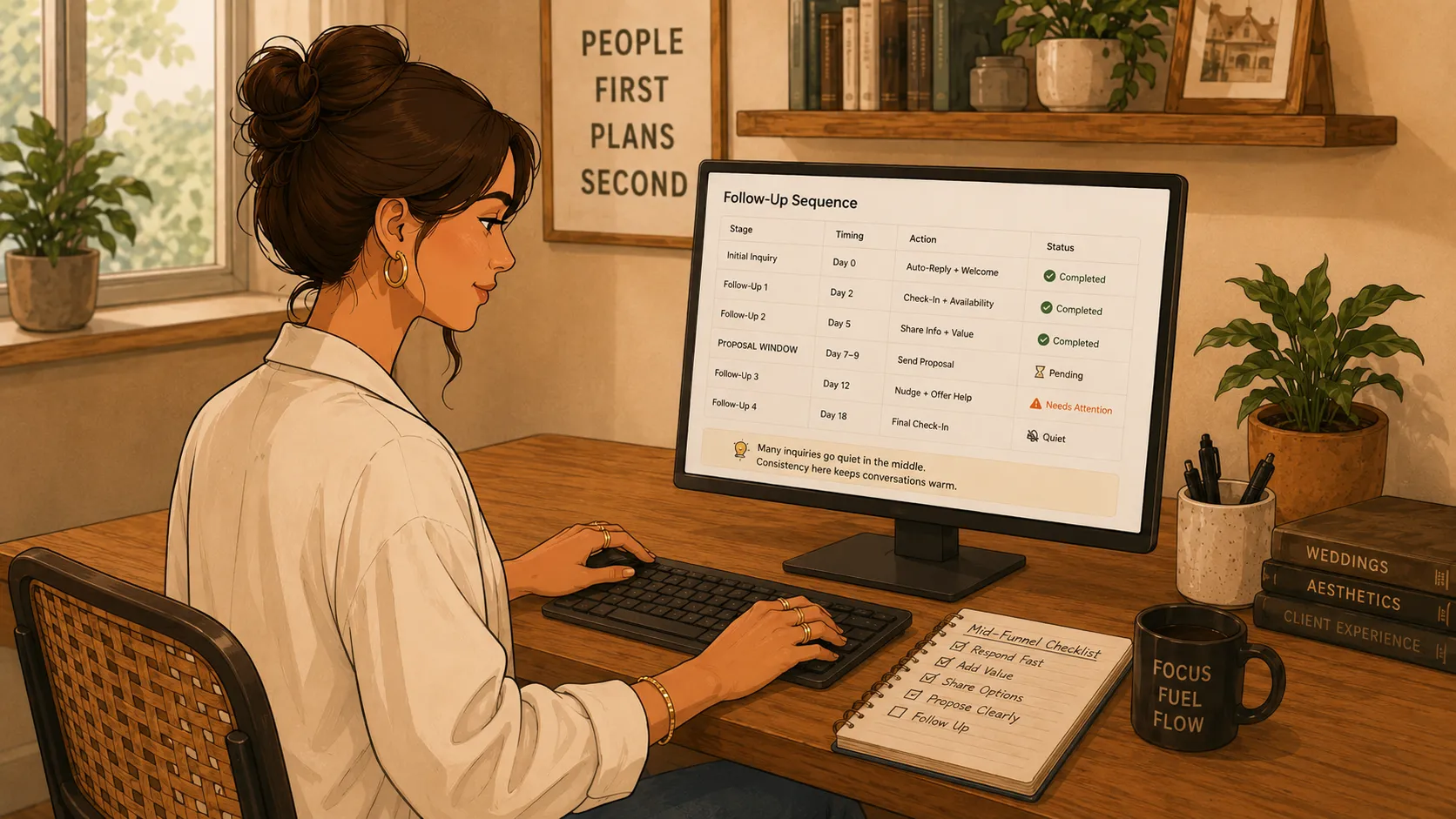
No follow-up after the first reply. Many vendors send a solid initial response and then wait. If the couple does not reply, the lead quietly disappears. A single follow-up, sent two or three days later, can re-engage a meaningful share of those conversations.
No system tracking what happened. Without a CRM or clear pipeline, it is easy to lose track of which leads got a first reply, which got a proposal, and which went quiet three weeks ago. Busy seasons make this worse. When you cannot see the status of your leads at a glance, you cannot act on them.
Proposals that take too long. If a couple has to wait a week for a proposal after showing clear buying intent, the urgency they felt when they first reached out has faded. A competitor who sent a proposal in two days looks more organized.
What fixing the mid-funnel looks like
The fix is not a new marketing channel. It is a system for the leads you are already getting.
That means:
- An automated acknowledgment so every inquiry gets an immediate first touch, even when you are unavailable
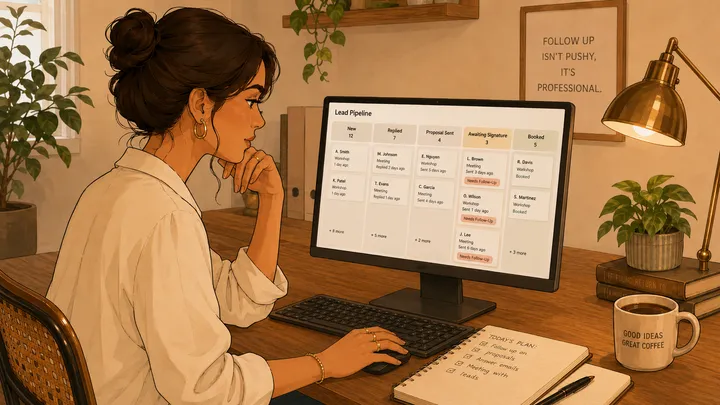
- A CRM pipeline that shows every lead by stage: new, replied, proposal sent, awaiting signature, booked, so nothing disappears into your inbox
- Follow-up reminders so you know when a warm lead has gone quiet and when to reach out again
- Templates that sound like you, so drafting a follow-up takes two minutes instead of twenty
- A proposal process that is fast enough to strike while the couple is still excited
None of this requires a large technology stack. It requires a clear workflow and the right tools configured around it.
The bottom line
If you are getting inquiries but not seeing the follow-up momentum you expect, the answer is rarely just “get more leads.”
It is more likely that good leads are slipping through a gap in your mid-funnel: a slow reply here, a missed follow-up there, a proposal that took too long. Each individual slip feels small. Across a booking season, they add up to opportunities you could have handled more clearly.
The mid-funnel is where the inquiry-to-booking path breaks down most often. It is also where small improvements can be measured most clearly: speed-to-lead, follow-up completion, proposal turnaround, and fewer dropped opportunities. It will not create demand by itself, but it helps you make better use of the inquiries you already earn.
If inquiries are slipping between first reply and proposal, a response and follow-up audit can show you exactly where the momentum stops. See how we fix the mid-funnel →