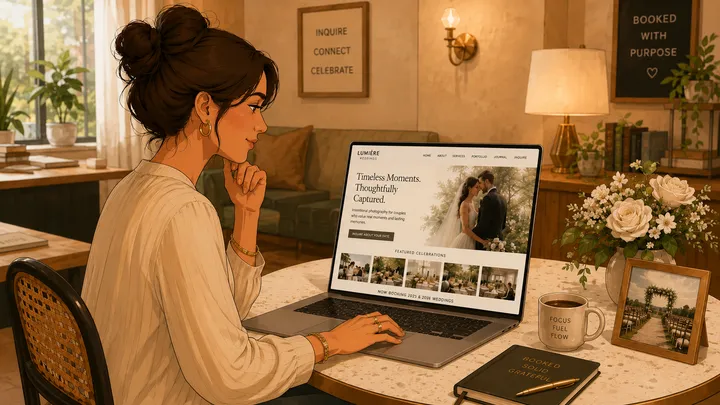
Most wedding vendor websites are designed to impress. Beautiful galleries, clean layouts, carefully chosen photos, a short bio.
And many of them fail to convert.
Not because the work is not impressive. Because the website was built to look good rather than to move visitors through a decision. Those are not the same thing.
The problem
A couple lands on your website after finding you through Google, a referral, or a venue recommendation list. They like what they see. They scroll through the portfolio. They read a little.
Then they leave.
They did not inquire. They did not know what to do next. The website looked beautiful but gave them no clear reason to take action.
This is the website conversion problem, and it is one of the most common inquiry leaks in the wedding vendor business. The couple was interested. The website just did not close the gap.
What converting actually means
A converting website does not just show your work. It moves visitors from interest to action.
That means every page has a job:
- The home page communicates who you are, what you do, and who you serve immediately, without the visitor having to hunt for it.
- The portfolio page gives couples context, not just images. What kind of events? What style? What venues? What makes your work different?
- The services or packages page answers the questions couples are actually asking before they reach out: what is included, what does it cost in general terms, and what happens next.
- The contact or inquiry page tells the couple exactly what to expect after they submit: response time, next step, what the process looks like.
Most vendor websites do well on portfolio and home, and fall apart on the last two.
The four places websites lose good inquiries
1. Vague or missing service descriptions “I offer full floral design for weddings and events” is not enough. Couples want to know what that means in practice: minimum investment, service area, what you specialize in, what the proposal process looks like.
2. No clear next step A website that ends with “contact me” and a blank form leaves the decision entirely on the visitor. A website with a clear call to action like “Request a quote,” “Check availability,” or “Book a consultation” gives the visitor a reason to act now.
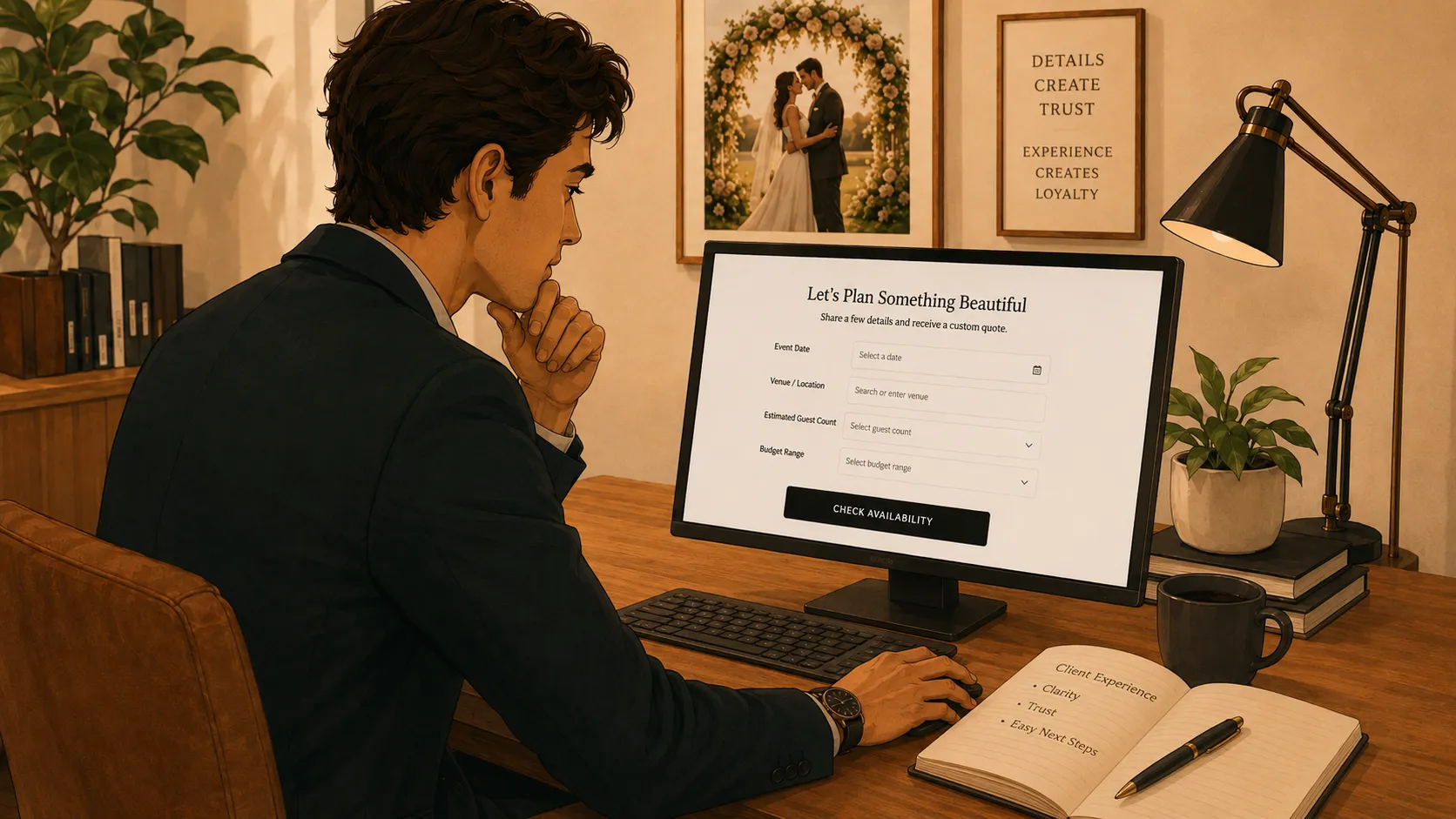
3. Forms that collect too little A form that only asks for name and email creates a vague inquiry that is hard to respond to well. A form that also captures date, venue, guest count, budget range, and event type gives you what you need to write a strong first reply and helps couples who are not a good fit self-qualify out before anyone wastes time.
4. Slow load speed on mobile Most couples are browsing on their phones. A site that loads slowly, renders awkwardly, or has galleries that stall on a mobile connection loses the couple before they see your work.
What this looks like in practice
A florist who added a minimum investment note to their inquiry page saw vague budget-misaligned inquiries drop while well-qualified leads increased. They were not turning away more business. They were getting fewer inquiries that were never going to convert.
A photographer who added a three-step process explanation below their contact form, “Submit the form, I’ll reply within 24 hours, we’ll set up a call,” saw more completions. Couples needed to know what they were committing to before they would fill it out.
A venue that replaced a generic contact form with an availability-check flow asking for preferred date, guest count, and event style got more useful inquiries and was able to reply faster with relevant information already in hand.
The bottom line
A beautiful website is table stakes. What matters is whether it moves visitors toward an inquiry.
If your site gets traffic but not inquiries, the design is rarely the problem. The problem is usually structure, clarity, or call to action. Those are fixable, and fixing them directly improves a measurable first stage of the client journey without requiring more traffic or a bigger marketing budget.
If you are not sure where your site is losing visitors, a website and inquiry flow audit can show you what to fix first. See how we improve visibility and inquiry conversion →